
If you have been battling obesity for years trying every diet, every medication, every program and nothing has worked long term you are not alone.
According to the studies more than 40% of American adults are currently living with obesity.
Many people eventually start searching for how to lose weight with surgery when traditional weight loss methods fail to deliver lasting results.
Weight loss surgery is one option your doctor may have mentioned.
But before you make any decision here is what you actually need to know:
- Who genuinely qualifies for surgery
- Which procedure is right for which person
- How surgery compares to the new medications
- What the emotional journey actually looks like
- What happens to your body 1, 5 and 20 years after surgery
Table Of Contents
- What does it actually mean to lose weight with surgery?
- Who qualifies for weight loss surgery?
- Types of weight loss surgery
- Medications vs Weight loss surgery
- What happens when weight loss surgery does not work
- The emotional side of weight loss surgery
- What happens to your body after surgery
- The loose skin reality after major weight loss
- Real risks of weight loss surgery
- Final thoughts
- FAQ
What Does It Actually Mean to Lose Weight with Surgery?
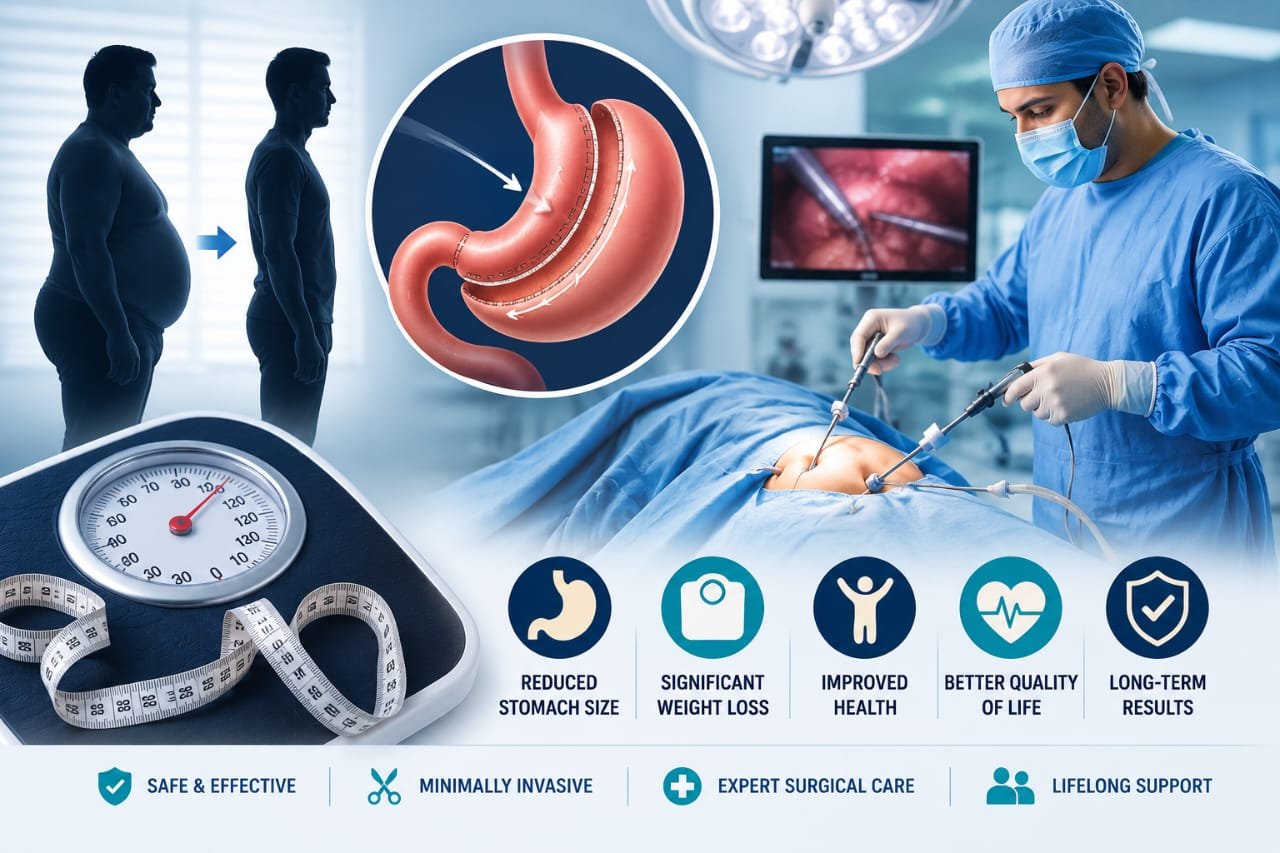
Weight loss surgery medically called bariatric or metabolic surgery physically changes your digestive system.
Depending on the procedure it either:
- Reduces the size of your stomach
- Reroutes your intestines
- Or does both at the same time
The result:
- You feel full faster
- You eat significantly less
- Your body absorbs fewer calories
- Your hunger hormones drop dramatically
According to the surgeons, surgery alone is not enough.
Long term success requires permanent lifestyle changes healthier eating, regular physical activity and consistent medical follow up.
Surgery is the most powerful tool available for severe obesity.
But you still have to do the work.
Who Qualifies for Weight Loss Surgery? Bariatric Surgery BMI Requirements Explained
Standard BMI Criteria
you may be a candidate if:
- Your BMI is 40 or higher — classified as Class III obesity
- Your BMI is 35–39.9 and you have at least one of the following obesity related conditions:
- Type 2 diabetes
- High blood pressure
- Obstructive sleep apnea
- High cholesterol
- Fatty liver disease
- Your BMI is as low as 30 if you have Type 2 diabetes that has not responded to diet, exercise or medication
Not sure where you stand? Use our BMI calculator to see whether you meet basic weight loss surgery requirements.
What Else Does Your Surgeon Evaluate?
BMI is just the starting point.
Your full evaluation team will also assess:
- Your complete history of diet and exercise attempts
- Your ability to safely handle general anesthesia
- Your psychological readiness for permanent lifestyle changes
- Any previous abdominal surgeries that may complicate the procedure
A standard pre surgery evaluation team includes:
- An internist (internal medicine doctor)
- A registered dietitian (RD)
- A psychologist or psychiatrist
- A board certified bariatric surgeon
This evaluation is not a barrier.
It is designed to maximize your chances of long term success.
Types of Weight Loss Surgery - What Are the Safest Options with the Fewest Side Effects?
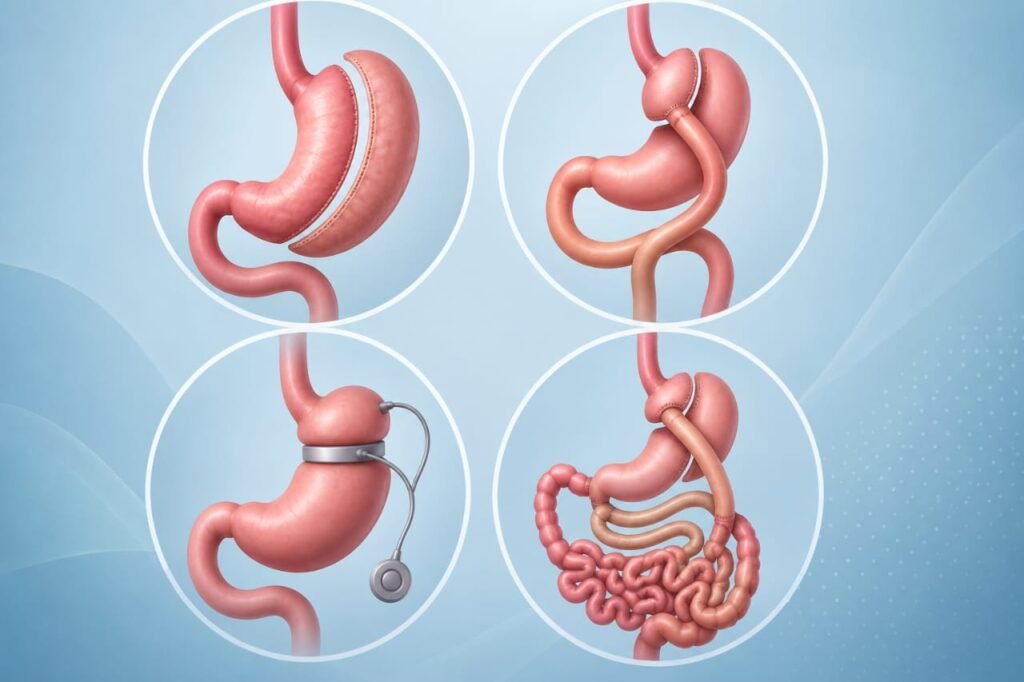
Sleeve Gastrectomy (Gastric Sleeve) — Most Common in the USA
Currently the most performed weight loss surgery in the United States
What happens during the procedure:
- Surgeon removes approximately 75–80% of the stomach
- Leaves behind a narrow banana shaped sleeve
- The portion producing the hunger hormone ghrelin is removed significantly reducing appetite
Key advantages:
- No rerouting of intestines
- Lower risk of nutrient malabsorption vs bypass
- Shorter surgery time
- Can serve as a bridge to other procedures if needed
- Suitable even for patients with high risk medical conditions
Expected weight loss:
- Months 1–6: approximately 35–45% of excess weight lost
- Months 6–18: approximately 60–70% of excess weight lost
Important: Sleeve gastrectomy is permanent and irreversible.
Roux-en-Y Gastric Bypass — Longest Track Record
Gastric bypass has been performed for over 20 years and has the most long term data of any bariatric procedure.
Published studies show patients maintaining the majority of their weight loss even at the 20 year follow-up mark.
What happens during the procedure:
- Surgeon creates a small walnut sized stomach pouch
- Connects it directly to the small intestine
- Food bypasses most of the stomach reducing both food intake and calorie absorption
Key advantages:
- Greater long term weight loss than sleeve
- Highly effective for Type 2 diabetes resolution
- 20+ years of proven clinical data
Disadvantages:
- Higher risk of long term vitamin and mineral deficiencies
- Requires lifelong supplementation (B12, iron, calcium, vitamin D)
- More complex surgical procedure
Biliopancreatic Diversion with Duodenal Switch (BPD/DS) — Most Powerful, Highest Risk
Best suited for:
- Patients with BMI 50+
- Severe obesity related conditions that have not responded to other approaches
Key facts:
- Combines sleeve gastrectomy with major intestinal bypass
- Produces the most dramatic weight loss of any procedure
- Carries the highest risk of serious nutritional deficiencies
- Requires the most rigorous long term medical monitoring
Adjustable Gastric Band — Declining in Popularity
Once widely used now significantly less common across the US.
why this decline?
- It produces less weight loss than sleeve or bypass
- It has higher long term complication rates
- Many patients eventually require band removal
One advantage: It is the only fully reversible weight loss surgery option currently available.
Robotic Weight Loss Surgery — The Emerging Option Worth Asking About
Many leading bariatric centers across the US are now performing sleeve and bypass procedures robotically.
Key benefits reported in clinical settings:
- Even faster recovery times post surgery
- Reduced post operative pain levels
- Greater surgical precision in complex cases
- Smaller incisions and less scarring
If you are researching hospitals, ask specifically whether they offer robotic assisted bariatric surgery.
GLP-1 Medications vs. Weight Loss Surgery
Medications like Wegovy (semaglutide/Ozempic) and Zepbound (tirzepatide/Mounjaro) have genuinely changed the treatment landscape.
Here is an side by side comparison:
| GLP-1 Medications | Bariatric Surgery | |
|---|---|---|
| Average weight loss | 10–21% of body weight | 25–35% of body weight |
| Invasiveness | Non-invasive injection | Surgical procedure |
| Reversibility | Stop anytime | Mostly permanent |
| Long-term data | 5–10 years max | 20+ years |
| Muscle loss | Significant | Much lower |
| Weight regain if stopped | Rapid | Much slower |
| GI side effects | 50% of users experience them | Surgical risks instead |
| Cost | Ongoing monthly expense | One-time surgical cost |
Who should strongly consider GLP-1 medications first:
- BMI between 27–34
- Patients with contraindications for surgery
- Patients at high surgical risk
- Those who cannot commit to permanent lifestyle changes
Who should strongly consider surgery:
- BMI 40 or higher
- Type 2 diabetics clinical trials show surgery outperforms medications for diabetic patients
- Patients who cannot tolerate GLP-1 side effects (nearly 50% develop GI issues)
- Those who do not want lifelong medication dependency
Who may benefit from BOTH:
- Very high BMI patients needing every effective tool available
- Patients who regained weight after surgery
- Those using GLP-1 medications before surgery to reduce surgical risk
What Happens When Weight Loss Surgery Does Not Work?
Surgery does not always produce the expected results.
Reasons surgery may underperform:
- Not following the recommended post surgery diet
- Return to old emotional eating patterns
- Insufficient physical activity
- Hormonal or metabolic factors unique to the individual
- Anatomical changes over time (stomach can stretch gradually)
What can be done if surgery stops working:
- Revision surgery modifying or converting the original procedure
- Adding GLP-1 medications to support ongoing weight management
- Intensive dietary counseling with a registered dietitian
- Psychological therapy to address underlying behavioral patterns
- Joining structured bariatric support programs
The Emotional Side of Weight Loss Surgery
Losing dramatic amounts of weight changes more than just your body.
It changes your identity, your relationships and your mental health in ways most people are completely unprepared for.
Real patient experiences shared on communities like Reddit’s r/bariatricsurgery reveal a consistent emotional pattern:
Months 1–3:
- High excitement and motivation
- Rapid visible weight loss
- Feeling in control for the first time in years
Months 4–8:
- Motivation begins to dip
- “Head hunger” emerges wanting food even without physical hunger
- Old emotional eating patterns can resurface
- Relationship dynamics with friends and family may shift unexpectedly
Months 12–18:
- Lowest weight typically reached
- Most patients report feeling incredible
- Confidence and energy at their highest point
Year 2 onwards:
- Some weight regain is normal and expected
- Emotional relationship with food becomes the single biggest factor in long-term success
- Ongoing psychological support makes a measurable difference
The bottom line:
Psychological assessment before surgery is not just a box to tick.
Research consistently shows it is one of the strongest predictors of long term bariatric success.
What Happens to Your Body After Surgery: A Year by Year Breakdown
The First Year
- Weeks 1–2: Liquid diet only approximately 1 pound per day of initial rapid loss
- Months 1–3: 35–45% of excess weight typically lost
- Months 6–12: 60–70% of excess weight lost the weight loss begins to slow
- Most obesity related conditions such as Type 2 diabetes, high blood pressure and sleep apnea significantly improve or fully resolve within this period.
Years 1-5
- Weight loss stabilizes
- Some regain typically less than 25% of total weight lost is normal according to Cleveland Clinic data
- Lifelong vitamin and mineral supplementation remains essential
- Regular follow up appointments with your surgical team are critical for sustained results
Years 5-20
Long term gastric bypass data published in studies shows patients maintaining the majority of their weight loss at the 20 year mark sustained documented improvements in:
- Cardiovascular health
- Type 2 diabetes control
- Life expectancy
- Overall quality of life
The Loose Skin Reality After Major Weight Loss: What to Expect and What You Can Do
Rapid significant weight loss almost always results in excess loose skin.
Most commonly affected areas:
- Abdomen
- Upper arms
- Inner thighs
- Chest and breasts
Factors that determine how much loose skin you develop:
- Age — younger skin retains more elasticity
- Total weight lost — the more you lose, the more skin
- Speed of weight loss — rapid loss leaves less time for skin to adapt
- Genetics — skin elasticity has a hereditary component
What can be done:
Body contouring procedures such as abdominoplasty (tummy tuck), arm lifts or thigh lifts can surgically remove excess skin folds.
Most surgeons recommend waiting until your weight has been stable for at least 12–18 months post bariatric surgery before pursuing any body contouring procedure.
Real Risks of Weight Loss Surgery: Short Term and Long Term

Short-term surgical risks:
- Excessive bleeding during or after surgery
- Infection at incision sites
- Blood clots (deep vein thrombosis)
- Adverse reactions to anesthesia
- Leaks along staple lines rare but serious
- Lung or breathing complications
Long-term risks:
- Acid reflux: most common long term issue particularly with sleeve gastrectomy
- Nutritional deficiencies: iron, vitamin B12, calcium, vitamin D requiring lifelong supplementation
- Gallstones: rapid weight loss increases gallstone risk
- Dumping syndrome: nausea, diarrhea, dizziness after eating high sugar or high fat foods
- Intestinal blockage: can cause nausea, vomiting, difficulty eating
- Hernias: at incision sites
- Hypoglycemia: low blood sugar particularly after gastric bypass
- Revision surgery: required in some cases when initial results are inadequate
The reassuring stat:
Experiences show serious complications occur in less than 1% of bariatric surgeries performed laparoscopically.
This makes it statistically safer than many other commonly performed surgical procedures in the US.
Final Thoughts Is Weight Loss Surgery Actually Worth It?
Let me be straight with you.
Nobody wakes up one day and thinks “you know what I want someone to surgically remove 80% of my stomach.”
This decision comes after years of struggling.
After trying every diet that promised results and delivered nothing.
After watching your health slowly decline and feeling completely stuck.
If that is where you are right now this article was written for you.
Learning how to lose weight with surgery is not about taking a shortcut.
It is about finally choosing a solution that actually matches the size of the problem.
And here is the truth:
Surgery is just the beginning.
The real work starts the moment you wake up from the procedure.
What you eat, how you move, how you handle stress and how you show up to your follow up appointments that is what separates people who transform their lives from people who regain the weight two years later.
The good news!
The people who go in with realistic expectations, a solid support system and genuine commitment
They do not just lose weight.
They get their lives back.
Better energy, better sleep and off medications they thought they would be on forever. Doing things with their kids or grandkids they had not done in years.
That is what this surgery can do when it is the right decision made for the right reasons.
If you are seriously considering it do not sit on this decision alone.
Book a consultation with a board certified bariatric surgeon. Ask every question you have and get a second opinion if you need one.
You deserve accurate information and a team that supports you not a rushed appointment and a pamphlet.
Take your time. Do your research. And make the decision that is right for your body and your life.
Related articles
Frequently Asked Questions About How to Lose Weight with Surgery
How much weight can you realistically lose with weight loss surgery?
Most patients lose 60–80% of their excess body weight within the first 12–24 months.
Results depend on:
- The specific procedure chosen
- Adherence to post surgery dietary guidelines
- Consistency with physical activity
- Regular medical follow up care
What is the safest weight loss surgery with the fewest side effects?
Sleeve gastrectomy currently offers the best balance of effectiveness and safety for most patients.
Serious complications occur in less than 1% of cases according to published clinical data.
However, the safest option for you personally depends on your BMI, existing health conditions and surgical history.
What are the bariatric surgery requirements for a BMI under 40?
If your BMI is between 35–39.9 you may still qualify with at least one of:
- Type 2 diabetes
- High blood pressure
- Obstructive sleep apnea
- High cholesterol
- Fatty liver disease
Some programs accept patients with BMI as low as 30 if they have uncontrolled Type 2 diabetes.
How much weight can you lose with gastric sleeve in the first 6 months?
Most gastric sleeve patients lose approximately 35–45% of their excess body weight within the first 6 months after surgery.
What liquids can you drink during week 1 of the gastric sleeve pre-op diet?
During the first week post surgery most bariatric programs recommend:
- Water sipped slowly never gulped
- Sugar free, non carbonated clear fluids
- Clear broths (low sodium)
- Sugar free gelatin
- Protein shakes with at least 20–30g of protein per serving
- Decaffeinated herbal teas
Your surgical team will provide a specific protocol tailored to your procedure and individual needs.
How do I tell my family I am having weight loss surgery?
- Frame it around health not appearance or vanity
- Share specific health concerns such as diabetes, blood pressure, joint pain, sleep apnea
- Present it as a medically supervised decision, not an impulse
- Give family members time to ask questions without getting defensive
- Share educational resources so they understand what the surgery actually involves
Family support is one of the strongest documented predictors of long term bariatric surgery success.
Will I regain weight after bariatric surgery?
Some weight regain after the 12–18 month mark is common and expected.
Typically this is less than 25% of total weight lost, according to Cleveland Clinic data.
Patients who maintain the best long term results consistently:
- Attend all scheduled follow up appointments
- Stick to protein first dietary habits
- Exercise at least 150 minutes per week
- Address emotional eating through therapy or support groups
About The Author
Ali Zishan Raza is a health and wellness blogger with a focus on evidence based weight loss research. All content on this site is thoroughly fact checked against guidelines from the NIH, CDC, ASMBS and PubMed before publication.
 Editorial Process: Every article on this site is researched using peer reviewed medical sources, government health databases and real patient communities. We do not publish medical opinions we synthesize what the science and clinical guidelines actually say.