
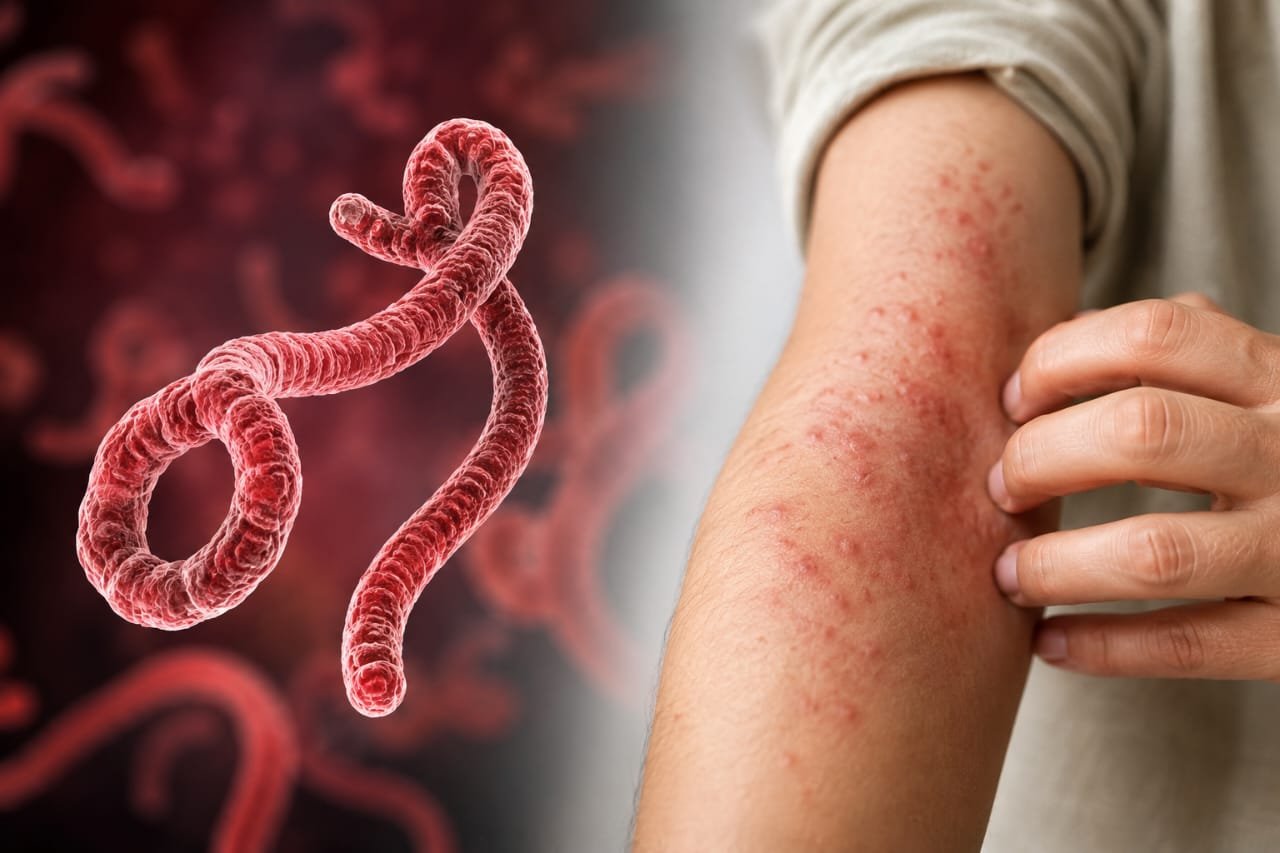
Hearing the word “Ebola” in the news can instantly trigger worry and that feeling is completely valid. But here is the truth most people don’t realize understanding the facts is your most powerful protection.
One of the most misunderstood signs of this disease is the skin rash it produces. When does it show up? What does it actually look like? Can it be prevented?
Table of contents
- What is the Ebola virus rash?
- Full symptom picture & day-by-day timeline
- The rash up close: appearance, body parts & skin tones
- Ebola Rash vs other viral rashes
- What does the rash signal medically?
- Who is most at risk?
- How to prevent and treat Ebola Rash
- Myth vs fact: ebola misconceptions debunked
- What to do if you suspect Ebola virus rash?
- Life after ebola: long term effects in survivors
- Ebola outbreak: current situation
- Conclusion
- Frequently asked questions
What Is the Ebola Virus Rash?
The ebola virus symptoms rash is a maculopapular skin reaction producing flat discolored patches and small raised bumps simultaneously. It typically develops between days 5 and 7 of illness well after the initial flu like symptoms appear.
This means the rash is not an early warning sign. It is a mid stage marker signaling the disease is advancing into more dangerous territory. When it appears alongside vomiting, diarrhea and intense fatigue that combination demands immediate medical attention.
 Quick Tip: A rash alone never confirms Ebola. Doctors always assess travel history, exposure risk and the complete symptom picture before any diagnosis is made.
Full Symptom Picture & Day-by-Day Timeline
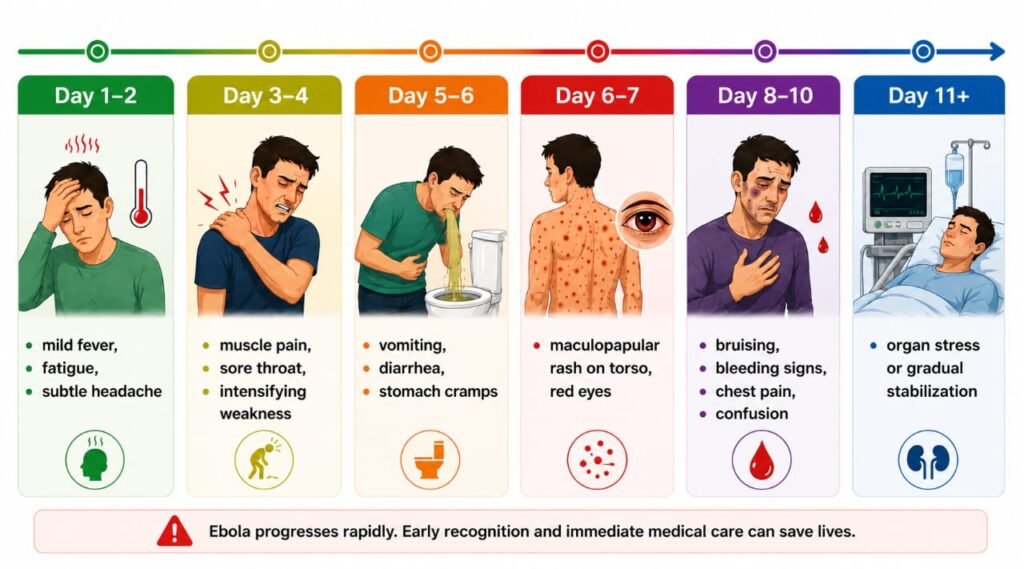
What makes Ebola especially dangerous early on is how unremarkable it feels. Fever, body aches, fatigue it mimics a bad flu almost perfectly. This is why travel history and potential exposure details are so critical to share with your doctor right away.
The jump from mild to severe can happen faster than most people expect. Here is exactly how symptoms progress day by day:
Day 1–2
Day 3–4
Day 5–6
Day 6–7
Day 8–10
Day 11+
 Note: This timeline reflects averages. Individual progression varies based on the Ebola strain, viral exposure amount and speed of medical intervention.
The Rash Up Close: Appearance, Body Parts & Skin Tones
Here is everything you need to know about the rash itself.
What Type of Rash Is It?
The Ebola rash is classified medically as maculopapular combining two distinct skin changes:
- Macules — flat areas of discolored skin
- Papules — small firm raised bumps
Together they create a blotchy uneven texture that spreads across affected areas of the body.
Where Does It Appear?
The rash consistently begins on the chest and back before potentially spreading to the shoulders, upper arms, neck, face and legs. The torso is almost always the starting point.
How It Looks on Different Skin Tones
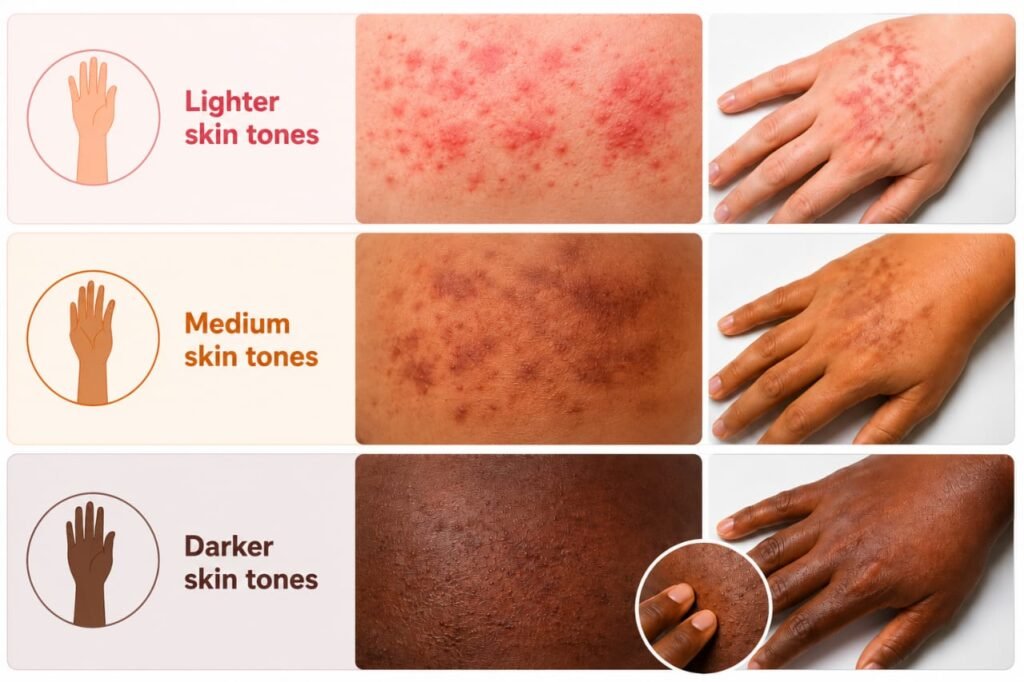
This is a critical detail and it genuinely matters for accurate recognition:
- Lighter skin tones: Red or pink blotchy patches with visible raised bumps relatively easy to spot
- Medium skin tones: Darker pink or brownish red uneven patches that can initially be mistaken for irritation or heat rash
- Darker skin tones: Often very difficult to detect visually. The discoloration may be subtle. Gently running fingers over the skin to feel raised texture is frequently more reliable than visual inspection alone
Is It Itchy or Painful?
Unlike allergic rashes or chickenpox the Ebola rash is not intensely itchy. The skin typically feels tender, tight or sore to the touch. Severe itching is not a feature of this rash.
Ebola Rash vs Other Viral Rashes
Many rashes look similar to untrained eyes. This comparison table cuts through the confusion:
Ebola
Measles
Dengue
Monkeypox
Chickenpox
Did You Know? Dengue fever widespread across tropical regions produces a strikingly similar rash to Ebola. Accurate diagnosis always requires laboratory blood testing never visual assessment alone.
What Does the Rash Signal Medically
The rash’s appearance indicates the virus is triggering a widespread inflammatory response blood vessels are under serious stress and the immune system is in overdrive. If small blood filled spots called petechiae appear within or around the rash this signals the beginning of hemorrhagic disease a medical emergency requiring immediate hospitalization.
Who Is Most at Risk?
The honest reassurance first most people face an extremely low risk. Ebola does not spread through casual contact, shared air or everyday social interaction.
Higher risk groups include:
- Healthcare workers treating Ebola patients without complete protective equipment
- Family members and caregivers providing hands on care to an infected person
- People involved in traditional burial practices involving physical contact with the deceased
- Recent travelers to active outbreak regions
- Laboratory workers handling biological samples from confirmed cases
- Anyone with unprotected direct contact with blood or body fluids of a confirmed patient
Understanding your actual risk level matters enormously. Grounded awareness protects you far better than panic ever could.
How To Prevent and Treat Ebola Rash
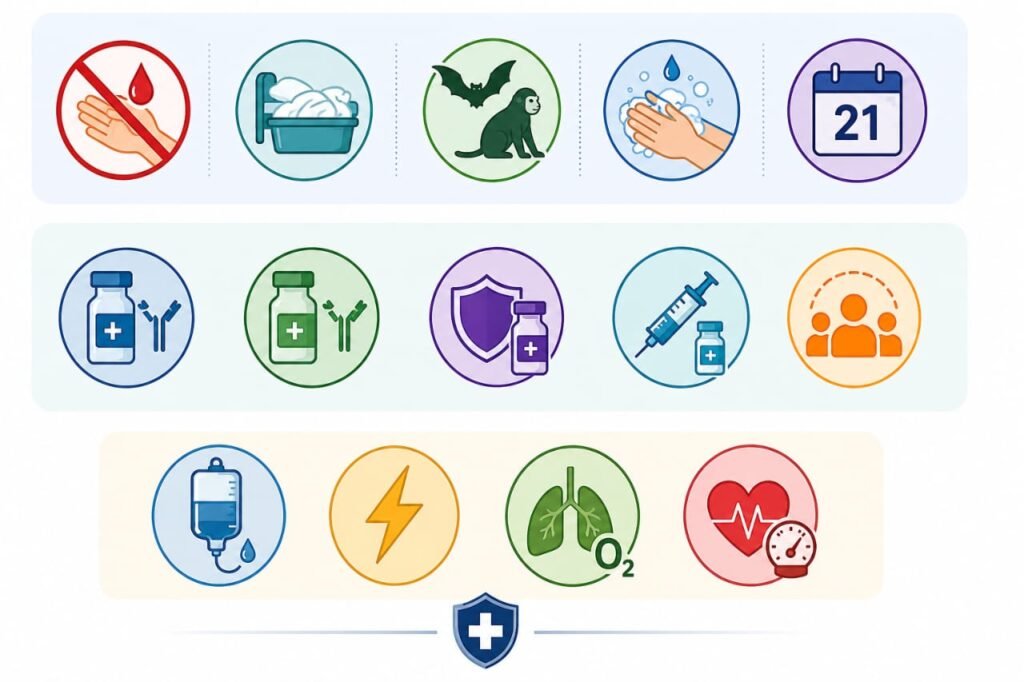
The Ebola rash usually improves as the underlying viral infection is brought under control through appropriate medical treatment and supportive care.
- Avoid all direct contact with blood or body fluids of anyone suspected of Ebola infection
- Never handle bedding, clothing or medical items that have contacted an infected person
- Avoid contact with bats, primates and wild animals in outbreak regions these are known natural virus reservoirs
- Do not consume bushmeat in Central or West African outbreak areas
- Wash hands thoroughly with soap and water for at least 20 seconds or use hand sanitizer with minimum 60% alcohol content
- After any possible exposure monitor your health closely for 21 full days
Vaccination Your Strongest Line of Defense
Current FDA approved treatment options for the Zaire ebolavirus strain are:
- Inmazeb (atoltivimab, maftivimab and odesivimab-ebgn)
- Ebanga (ansuvimab-zykl)
- ERVEBO is an FDA-approved vaccine protecting against Zaire ebola virus in individuals of 12 months and older
- A two dose combination of Ad26.ZEBOV and MVA-BN-Filo is used in some regions as an additional protective regimen
- A ring vaccination strategy is deployed during active outbreaks creating a protection barrier around confirmed cases by vaccinating their close contacts
Both work by neutralizing the virus directly. As viral load decreases through treatment and supportive care fluids, electrolytes, oxygen, blood pressure management all symptoms including the rash progressively improve.
If you are planning travel near an active outbreak zone speak to your doctor about vaccination options well before departure.
Myth vs Fact: Ebola Misconceptions Debunked
❌ Myth: Ebola spreads through the air like influenza. ✅ Fact: Ebola requires direct contact with infected body fluids from a symptomatic person. Airborne transmission does not occur.
❌ Myth: Being in the same room as an Ebola patient means automatic infection. ✅ Fact: Casual proximity — conversation, brief non-fluid contact — does not transmit the virus.
❌ Myth: The rash is always obvious and dramatic. ✅ Fact: On many skin tones the rash is subtle. Texture detection is often more reliable than visual observation.
❌ Myth: No treatment or vaccine exists for Ebola. ✅ Fact: Two FDA-approved treatments and an approved vaccine exist specifically for the Zaire ebolavirus strain.
❌ Myth: Full recovery means the virus is completely gone from the body. ✅ Fact: Ebola can persist in semen for up to 12 months post-recovery. Safe sexual practices remain essential throughout this period.
What To Do If You Suspect Ebola Virus Rash
Take these steps immediately in this exact order:
- Do not visit any clinic, urgent care or emergency room without calling first walk-in contact risks exposing others unknowingly
- Call your doctor or local emergency health line and describe your symptoms and full travel history
- Disclose every possible exposure contact with sick individuals, body fluids, animals or contaminated items in the past 21 days
- Isolate yourself at home while awaiting medical guidance avoid contact with family members and pets
- Do not share personal items towels, utensils or surfaces with anyone in your household
- Follow health authority instructions precisely they will direct you safely to the right facility
Life After Ebola: Long Term Effects in Survivors
Surviving Ebola is genuinely remarkable but recovery is rarely immediate or straightforward. Research documented through survivor studies describes Post Ebola Syndrome a cluster of lasting health challenges:
- Persistent joint and muscle pain lasting months after acute illness resolves
- Uveitis serious eye inflammation that can cause permanent vision loss without treatment
- Hearing difficulties reported across a significant portion of survivors
- Prolonged fatigue that takes months to fully resolve
- Memory difficulties and challenges with concentration
- Anxiety, depression and PTSD completely understandable responses to such a serious illness
- Viral persistence in semen requiring condom use or abstinence for at least 12 months post recovery
Ebola Outbreak: Current Situation
Health authorities have recently confirmed active Ebola cases in the DRC’s Ituri province with related monitoring in Uganda. The New York State Department of Health have issued formal health alerts advising clinicians to stay vigilant especially for returning travelers from Central and East Africa.
Conclusion
The ebola virus symptoms rash is one of the most significant mid stage markers of this serious disease and one of the least understood by the general public.
Here is everything that matters most from this guide:
- The rash arrives at days 5–7 not at the illness onset
- It is maculopapular flat patches and raised bumps primarily on the torso
- Detection on darker skin tones requires texture assessment more than visual color checking
- The rash cannot be treated alone resolving the infection resolves the rash
- Prevention through vaccination, hygiene and exposure avoidance is genuinely effective
- Survivors may experience Post-Ebola Syndrome ongoing medical support is essential
Ebola is serious but with the right knowledge it is also preventable and increasingly treatable. If you develop any concerning symptoms after travel to an affected region or possible exposure, contact a qualified healthcare professional immediately and call ahead before visiting any facility.
Explore more health guides
Frequently Asked Questions
When exactly does the Ebola rash appear?
Around days 5 to 7 after the first symptoms start during the progressive phase when vomiting and diarrhea are already present. Its arrival is a serious escalation signal requiring urgent medical contact.
Is the Ebola rash always visible on all skin tones?
No. On darker skin tones the visual change can be very subtle. Feeling for raised or uneven skin texture is often more reliable than looking for color changes alone.
Can you have Ebola without any rash appearing?
Yes not every patient develops a visible rash. Its absence does not rule out infection. Only laboratory blood testing can confirm or exclude an Ebola diagnosis.
How do you prevent the Ebola rash specifically?
Since the rash is a symptom of infection preventing it means preventing Ebola itself. Vaccination where eligible, strict hygiene, avoiding exposure in outbreak regions and using full protective equipment in healthcare settings are the key prevention strategies.
How is the Ebola rash different from a dengue or measles rash?
Timing and severity are the biggest differentiators. The Ebola rash appears later days 5 to 7 and carries a high risk of progressing to hemorrhagic bleeding that measles and dengue do not match. Laboratory testing is always required for definitive diagnosis.
Is touching the Ebola rash contagious?
Touching intact rash skin is not the primary transmission route. However broken, bleeding or blistered skin is highly infectious. Full Ebola contact precautions must be maintained at all times around any confirmed patient.
How long does the rash last?
The rash typically persists through the acute illness phase roughly one to two weeks and begins resolving as the patient either responds to treatment or the disease progresses. Recovery from the rash parallels overall recovery from the infection.
⚕️ Medical Disclaimer: This article is for informational purposes only and does not constitute medical advice. Always consult a qualified healthcare professional for diagnosis, treatment or any personal health guidance.